Part of the homogenization of baseball has been to essentially eliminate any difference between the American and National Leagues. The introduction now of the universal DH and a balanced schedule, whereby every team now plays every other team during the year erases almost any dissimilarity between either league.
The table below (introduction of the new balanced schedule this season) shows that divisional games have been de-emphasized while inter league games (AL vs NL) have been increased to ensure that each team plays all teams throughout the year. What this gives us is a decrease in the age old rivalries for teams in the same division. Instead, the thinking is that now fans are introduced to players and teams that they have little exposure to in the past. That might make some sense. Take for instance a generational talent such as Shohei Otani, who plays in the American League. Fans of NL teams though would never get the chance to see him if interleague play was not introduced and now expanded to include all teams, not just some teams in the other league.
| Game Category | 2022 (Unbalanced Schedule) | 2023 (Balanced Schedule) |
| Divisional Games (same league same division) | 76 | 52 |
| Intraleague Games (same league different division) | 66 | 64 |
| Interleague Games (different league) | 20 | 46 |
| Total | 162 | 162 |
The problem is that there are extremely few must see players in the league as compared to must see teams, meaning a team’s biggest rival is likely the hottest ticket for most fans.
Let’s put aside Shohei Otani for now, since he is really a unicorn in terms of players. When you think rivalries and matchups, what would you think about in terms of teams? Yankees-Red Sox, Cubs-Cardinals and Dodgers-Giants all come to mind. What do all those hot rivalries have in common? Yes, they are all in the same division. The new balanced baseball schedule implemented this year has though de-emphasized those matchups.
The expansion of interleague play though does not mean that you will get to see that great player from the other league’s team each year. In the new interleague play setup, all teams will play the teams in the other league only once during the year, so that might be a home or away game for your team. Therefore, Otani might not be coming to your NL park this year. The only exception is that the league has decided that there are “natural rivalries” based largely upon geographies and partly on history, and those teams will play each other twice in home and away series. Here is the list of those “natural rivalries”
- Angels-Dodgers
- Astros-Rockies
- Athletics-Giants
- Blue Jays-Phillies
- Guardians-Reds
- Mariners-Padres
- Orioles-Nationals
- Rangers-Diamondbacks
- Rays-Marlins
- Red Sox-Braves
- Royals-Cardinals
- Tigers-Pirates
- Twins-Brewers
- White Sox-Cubs
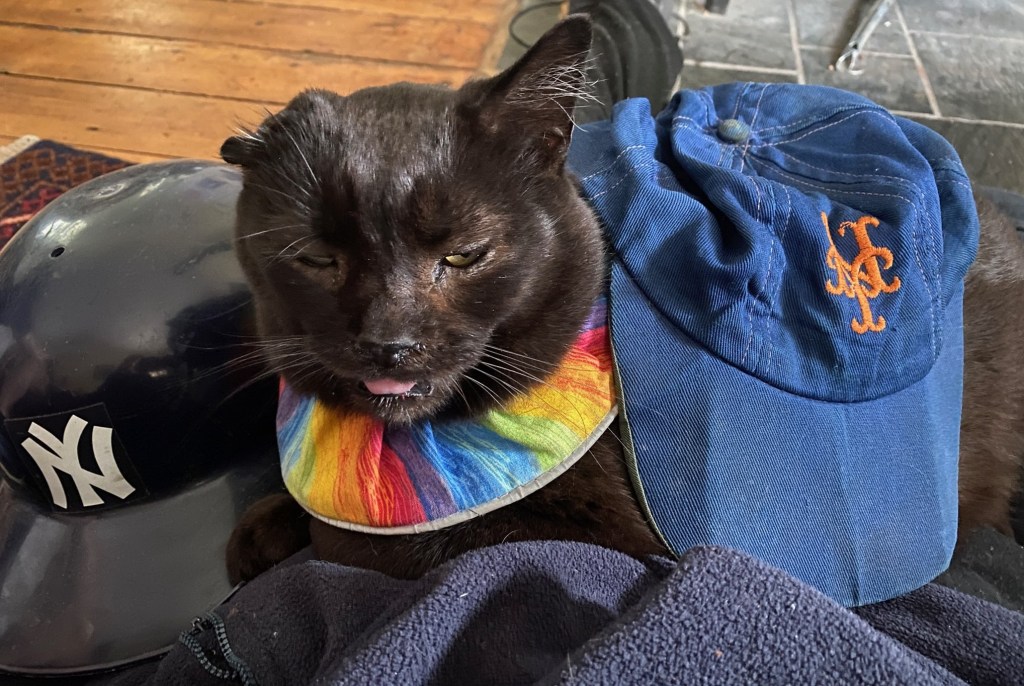
- Yankees-Mets
The geography argument we do understand to explain White Sox – Cubs, Yankees – Mets, Orioles – Nationals, Angels –Dodgers etc. In addition, Red Sox – Braves is interesting, since the Braves started in Boston as the Boston Braves. Yes, it used to be a two-team baseball town in Beantown until they then moved to Milwaukee in 1953 before finally relocating to Atlanta in 1966. Then again, I am not sure many younger fans in Boston even know or care that the Braves moved out of town 70 years ago.
Obviously, MLB ran out of interesting geographic rivalries and had to just make up what they could to come up with their “natural rivalries”, such as Astros-Rockies, Blue Jays-Phillies, Mariners-Padres, Rangers-Diamondbacks and Tigers-Pirates. Hey, they did the best they could! Stop complaining and enjoy your natural rivalry!
In reality, the true rivalries are those from a team’s own division. There used to be a point to those rivalries, since teams were battling it out for the top spot in their division to reach the playoffs, but with the introduction of wildcard spots, winning a division has been somewhat diluted.
A team in the past would play their divisional rivals about 19 games, which the new schedule reduced to 13 games for each team in their division. Therefore, it might seem really interesting that the Yankees get to play the Dodgers once a year, but how excited would Yankee fans be to also play the Colorado Rockies, San Francisco Giants or Washington Nationals to sacrifice games against rivals such as the Red Sox and Orioles. Similarly how fun is it now for Cubs fans who get to play teams such as the Mariners, Royals and A’s more and seeing their true rival the Cardinals less? We think we know the answer.
In the big picture, this is what MLB wants. Two leagues without any differentiation, but sadly one with diminishing rivalries and inter-divisional competition, which we believe makes the game as bland as a Tigers-Pirates “natural rivalry”.


 Baseball Purist
Leave a comment