
On October 31, 1973 Tom Seaver of the New York Mets became the first Cy Young winner to not win at least 20 games. Seaver only missed that mark by one win after recording a record of 19-10 for the 1973 season.
How times have changed.

There has not been a 20 game Cy Young winner in either league since Justin Verlander clocked in with a 21-6 season for the Houston Astros in 2019 to win the Cy Young in the American League (AL). In the National League (NL), the last 20 game Cy Young winner was Max Sherzer in 2016.
The number of 20 game winners has dropped precipitously in recent years. In the eight years from 1973 – 1980 there were 49 pitchers who won 20 or more games. The most recent eight years from 2017 – 2025 (excluding the 2020 shortened season due to Covid) there were only seven pitchers who won 20 or more games. The last 20 game winner in the NL was Spencer Strider for the Atlanta Braves in 2023, while in the AL it was the aforementioned Justin Verlander in 2019.
On the other end of the spectrum, there was a proliferation of 20-game winners back at the beginning of the modern age of baseball. The modern age of baseball is generally considered to have begun in 1901, with the founding of the American League (AL), effectively establishing the two-league structure (National League and American League) that forms the core of modern MLB.
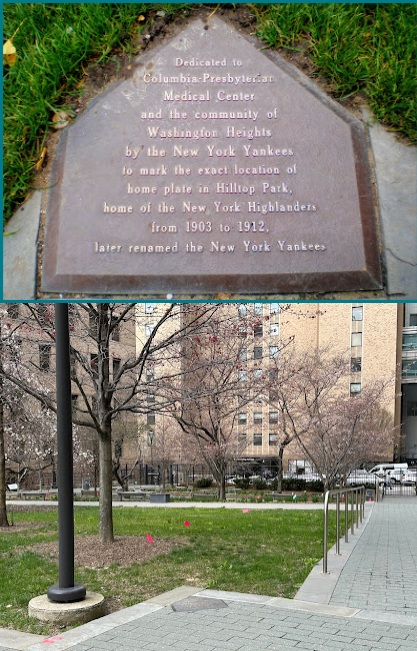
Shortly after the beginning of that era, Jack Chesbro won 41 games in 1904 for the New York Highlanders, which was the original name of the New York Yankees. The team officially became known as the Yankees beginning in 1913. Maybe even more amazing than Chesbro’s 41 season wins was that he started 51 games for the Highlander’s in 1904. Based on the 155 game schedule at that time, Chesbro started 33% of the games for the Highlander’s that year. In order to give that some context, this past year’s NL Cy Young winner, Paul Skenes of the Pittsburgh Pirates started 32 games in 2025 or 20% of the team’s starts. Skenes’ usage is normal for most top pitchers in a season nowadays barring any injuries, which means that today’s starting pitchers appear in one of every five games played. In the era of Chesbro, he was the starting pitcher once every three games. In addition, Chesbro pitched a mind boggling 454 innings that year. That would be unheard of in today’s era. Again, to keep that in context the leader in innings pitched in 2025 was Tarik Skubal of the Detroit Tigers, who pitched 213.2 innings or less than half of Chesbro’s. Chesbro’s 454 innings in 1904 is not the most in MLB history. That record goes instead to Ed Walsh who threw 464 innings for the Chicago White Sox in 1908.
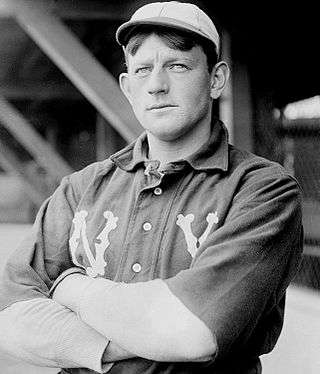
In 1904 there were nine pitchers in the AL along with Chesbro who had at least 20 wins, and another seven in the NL for a total of 16 pitchers with more than 20 wins that year.

The last pitcher to win at least 30 games was Denny McLain (31 wins in 1968) of the Detroit Tigers and the last pitcher to exceed 300 innings (304 innings in 1980) was Steve Carlton of the Philadelphia Phillies. As noted, today’s innings leaders rarely exceed 220 innings and 20 wins, reflecting how pitching strategies have shifted toward bullpen reliance and arm preservation.
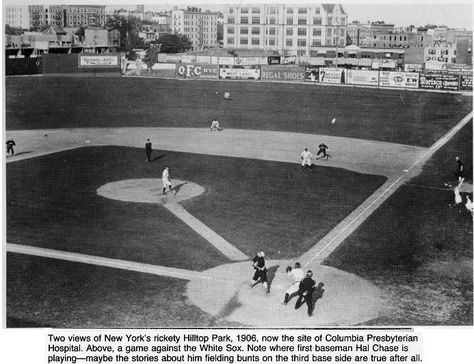
The key factors that pushed the wins and innings astronomically higher at the turn of the 20th century was that this was the Deadball Era with pitchers facing a much lower offensive output from batters and that the spitball had not yet been banned during the time of Chesbro and Walsh. The banning of the spitball would not happen until the 1920 season.
The table below shows the number of 20 game winners by league since 1973. The years 1981, 1994, 1995, 2006, 2009, 2017, 2020, 2024 and 2025 had zero 20-game winners in either league. The 1981 and 1994 seasons were shortened due to player strikes, and the 2020 season was shortened due to the COVID-19 pandemic.
| Year | American League (AL) | National League (NL) | Annual Total |
| 1973 | 7 | 1 | 8 |
| 1974 | 1 | 1 | 2 |
| 1975 | 0 | 2 | 2 |
| 1976 | 3 | 5 | 8 |
| 1977 | 3 | 6 | 9 |
| 1978 | 6 | 2 | 8 |
| 1979 | 3 | 2 | 5 |
| 1980 | 5 | 2 | 7 |
| 1981 | 0 | 0 | 0 |
| 1982 | 0 | 1 | 1 |
| 1983 | 4 | 0 | 4 |
| 1984 | 1 | 1 | 2 |
| 1985 | 2 | 4 | 6 |
| 1986 | 3 | 2 | 5 |
| 1987 | 2 | 0 | 2 |
| 1988 | 3 | 3 | 6 |
| 1989 | 2 | 1 | 3 |
| 1990 | 3 | 3 | 6 |
| 1991 | 2 | 2 | 4 |
| 1992 | 3 | 2 | 5 |
| 1993 | 1 | 4 | 5 |
| 1994 | 0 | 0 | 0 |
| 1995 | 0 | 0 | 0 |
| 1996 | 2 | 1 | 3 |
| 1997 | 3 | 1 | 4 |
| 1998 | 3 | 1 | 4 |
| 1999 | 1 | 2 | 3 |
| 2000 | 2 | 2 | 4 |
| 2001 | 3 | 4 | 7 |
| 2002 | 3 | 2 | 5 |
| 2003 | 4 | 1 | 5 |
| 2004 | 2 | 1 | 3 |
| 2005 | 1 | 3 | 4 |
| 2006 | 0 | 0 | 0 |
| 2007 | 1 | 0 | 1 |
| 2008 | 3 | 1 | 4 |
| 2009 | 0 | 0 | 0 |
| 2010 | 1 | 2 | 3 |
| 2011 | 1 | 2 | 3 |
| 2012 | 2 | 2 | 4 |
| 2013 | 1 | 0 | 1 |
| 2014 | 0 | 3 | 3 |
| 2015 | 1 | 1 | 2 |
| 2016 | 2 | 1 | 3 |
| 2017 | 0 | 0 | 0 |
| 2018 | 2 | 0 | 2 |
| 2019 | 2 | 0 | 2 |
| 2020 | 0 | 0 | 0 |
| 2021 | 0 | 1 | 1 |
| 2022 | 0 | 1 | 1 |
| 2023 | 0 | 1 | 1 |
| 2024 | 0 | 0 | 0 |
| 2025 | 0 | 0 | 0 |
 Baseball Purist
Leave a comment