
Another aspect of MLB meddling in the fundamentals of the game, which has led to the ……
dehumanization,
standardization,
homogenization,
and over-regulation
of baseball has been the introduction of Pitchcom. For those of you not aware of Pitchcom here is a bit of history:
PitchCom is a wireless communication system used in baseball that lets a player request pitches without using visible signals. Major League Baseball (MLB) approved the use of PitchCom before the start of the 2022 season with the intentions of deterring sign stealing and quickening the pace of play.”

We will cover the reason to deter sign stealing here and discuss the quickening of the pace of play aspect in our next post.
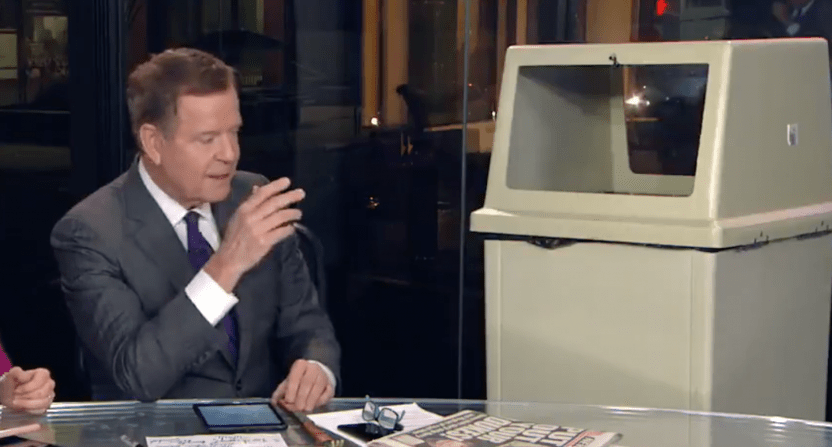
We normally think of stealing as wrong, and in most aspects of society that holds true. In the game of baseball though stealing signs has been woven into the fabric of the game from its beginning. Perhaps the decision to deter sign stealing was prompted when the Houston Astros “illegally used a video camera system to steal signs during the 2017 regular season and postseason, as well as parts of the 2018 regular season. The team, including bench coach Alex Cora and players like Carlos Beltrán, created a system to decode signs by watching live feeds on a monitor behind the dugout. The team experimented with various methods, but eventually decided banging a trash can with a bat was most effective” (this is true and we did not make this part up) to warn their players of the upcoming pitch.
The Astros were eventually caught and fined $5 million, forfeited first- and second-round draft picks in 2020 and 2021, and suspended the Houston manager AJ Hinch and general manager Jeff Luhnow for the entire 2020 season, including the playoffs.

As noted, Cora developed the sign stealing scheme that used technology to decode and transmit signs from opposing teams. Before MLB unearthed the Astros’ scandal, Cora had already moved on to become the manager of the Boston Red Sox in 2018. Evidently Cora did not feel much regret about cheating, since it appears that he picked up where he left off in Houston and brought a similar scheme to Boston in 2018.
The investigation into that scandal revealed that the Red Sox video replay coordinator (J.T. Watkins) used video technology during games to both decode opponents’ signs on at least some occasions during the 2018 regular season and illegally utilized game feeds in the replay room to help players during games. This undertaking was deemed less egregious than the Astros’ sign-stealing scheme.
Still this was a clear violation of MLB rules, since Watkins and Cora were using technology to decipher signs via technology during games. Coincidentally or not, the Red Sox went on to win the World Series that year. Therefore, two teams associated with Cora and two cheating scandals discovered later both led to championships for two different teams. Interesting.

It was reported later that Cora actually bragged about his exploits by stating, “We stole that [expletive] World Series,” according to a Boston Herald transcript of an excerpt of the book “Winning Fixes Everything: How Baseball’s Brightest Minds Created Sports’ Biggest Mess” by Evan Drellich.

After serving his 2020 suspension, Hinch was not out of baseball very long and signed on as the Detroit Tigers skipper for the 2021 season and continues on as their manager today. Cora ended stepping down as Red Sox manager in January 2020 when allegations of both his Houston and Boston schemes came to light. He was also eventually suspended from baseball for the 2020 season but only based on those findings that came out of the Astro investigation and not those claims from the Red Sox scandal. It did not take long though for the Red Sox to decide that all was forgiven as they rehired Cora on November 6, 2020 after serving his yearlong suspension.

Things even turned out well for Watkins, who was reinstated by the Red Sox right after serving his suspension. Then in January 2023 Watkins left the Red Sox and joined the Los Angeles Dodgers in a similar role to help their hitters with game planning. Hilariously, when announcing the hire, manager Dave Roberts of the Dodgers stated “ I think it’s just to give us whatever competitive advantage that we can get on the preparation side, the potential opposition pitchers, tendencies, and also work with our hitting guys closely”. Roberts then recognized that his quote in support of Watkins did not sound so good considering his (Watkins) history, but cautioned that Watkins would operate within the rules.
These scandals likely prompted MLB to turn to Pitchcom, but in retrospect the problem was that the punishments handed down by MLB did not fit the crime. Fining the Astros who had $368 million in revenue in 2018 (when they last supposedly stole signs) only $5 million was not much of a deterrent. The number should have been more like $50 million and potential forfeiture of their championship in 2017 and lifetime bans for those involved. The punishment levied against the Red Sox for their transgressions was literally a slap on the wrist, which included the suspension of Watkins for a year and the loss of a second round draft pick, yet no monetary fine.

In addition to the paltry punishment, not one player suffered any consequences in this case. How is that possible? If the teams were truly using technology to steal signs to benefit batters how could the players who received that information not be part of this scandal? The reality was that they were and that MLB decided to look the other way, because they decided they would rather avoid any prolonged fight with the Players’ Association, as well as the further negative publicity it would generate.
If MLB had handed down real punishments against those that used technology to steal signs they could have sent a strong message that the league would not tolerate such violations. Instead, what team wouldn’t sign up for getting their batters the pitches like the Astros did in 2017, which very well delivered them a championship, all for the cost of $5 million, some college draft picks and two sacrificial lambs in Hinch and Luhnow? We think most teams would have taken that deal.
Let’s be clear though. Stealing signs by non-electronic means has always been part of the game and is not a violation of the rules, but electronic means is another story. As far back as the December 1961 Winter Meetings, the National League banned the use of a “mechanical device” to steal signs. In 2001, Sandy Alderson (then the EVP of Baseball Operations for MLB) issued a memorandum stating that teams cannot use electronic equipment to communicate with each other during games, especially for the purpose of stealing signs.
Instead of truly coming down hard on the perpetrating parties, MLB decided that it was better to take away non-electronic means to steal signs performed by players, which had been a historical, strategic and legitimate part of the game of baseball from the beginning.

In our next post we will continue on with this sign stealing discussion and cover the dubious claim that the use of Pitchcom quickens the pace of play.


 Baseball Purist
Leave a comment