By: Bill Coleman
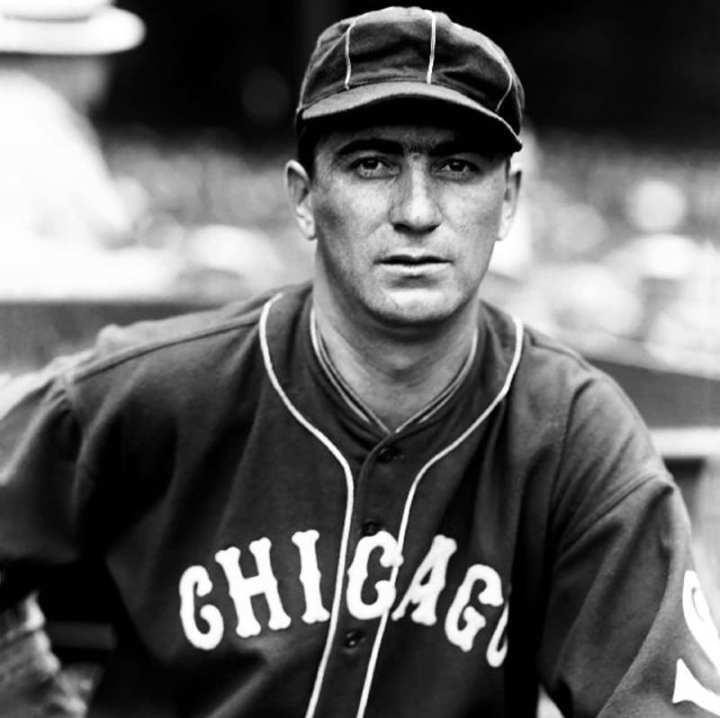
Morris “Moe” Berg was a major league catcher who spent 15 seasons in professional baseball. He was never a superstar. He hit .243 over his career, collected just six home runs and frequently found himself sitting on the bench.
Yet Berg possessed something more unusual than a powerful bat or a golden glove. He had a remarkable intellect, an extraordinary talent for languages, an insatiable curiosity about the world and an ability to move comfortably through environments where most people would have felt completely out of place.
He was also an American intelligence operative who, during World War II, was sent to Europe to investigate Nazi Germany’s atomic weapons program. At one point, he had been prepared to assassinate one of the world’s most famous physicists. And that is only the beginning.
A Princeton Graduate Who Preferred Baseball to Wall Street
Moe Berg was born on March 2nd, 1902, in New York City to Russian Jewish immigrant parents. His family eventually settled in Newark, New Jersey, where he grew up in the Roseville neighborhood. He was academically gifted from an early age, but baseball was his first love. Berg attended Princeton University, where he played shortstop for the baseball team and studied modern languages. He graduated magna cum laude in 1923. Think about that for a moment.
In an era when professional baseball was still largely a working-class occupation, Berg was an Ivy League graduate who could have pursued a prestigious academic or professional career. Instead, he signed with the Brooklyn Robins, the franchise that would eventually become the Dodgers.
He reportedly explained his decision with a wonderfully revealing observation: “I would rather be a ballplayer than a bank president or a judge.” It was an unusual choice, particularly for someone who would eventually become a lawyer himself.
After his first professional season, Berg traveled to Paris and studied at the Sorbonne. He subsequently attended Columbia Law School, completing his legal education while continuing to play professional baseball. He passed the New York bar examination in 1928. He was, quite literally, a major league baseball player with a law degree.
The Strangest Catcher in Baseball
Berg’s baseball career was unconventional from the beginning. He started as an
infielder but eventually transitioned to catcher after injuries made playing the infield more difficult. He played for the Brooklyn Robins, Chicago White Sox, Cleveland Indians, Washington Senators and Boston Red Sox. His greatest baseball asset was not his hitting. It was his intelligence.
Berg developed a reputation for understanding pitchers, studying opposing hitters and helping younger players. He was particularly respected for his defensive abilities. In fact, between 1931 and 1934, he caught 117 consecutive games without committing an error, an American League record that stood for 12 years. His teammates, however, never missed an opportunity to remind him that his academic accomplishments had not translated into hitting ability.

One famous joke involved Berg’s supposed knowledge of seven languages. A teammate reportedly responded: “Yeah, and he can’t hit in any of them.” Casey Stengel, who knew Berg, called him one of the strangest men ever to put on a baseball uniform. The baseball clubhouse was only though one of the places where Berg’s unusual personality became apparent.
Japan: Where the Baseball Player Became a Spy
One of the most remarkable chapters of Berg’s life began in 1934. He joined an American All-Star baseball team that traveled to Japan. The roster included some of the biggest names in the sport, including Babe Ruth, Lou Gehrig and Jimmie Foxx. The trip was supposed to promote baseball and strengthen American-Japanese relations. Berg, however, had another interest.
He spoke Japanese and was fascinated by the country’s military and industrial development. During the trip, he obtained a movie camera and filmed Tokyo Harbor, industrial facilities, and military installations. The circumstances were unusual. Berg reportedly visited a Tokyo hospital and gained access to its roof, where he filmed portions of the city. He subsequently provided the footage to American authorities. This is where the legend gets particularly interesting.

For years, Berg suggested his footage was used by American military planners in connection with the famous 1942 Doolittle Raid against Japan. It makes for a terrific story, but historians have questioned that claim. There is insufficient evidence that his footage played the operational role he later suggested. What is established is that Berg had demonstrated an unusual ability to gather potentially valuable intelligence while appearing to be nothing more than an American baseball player. He had found a second career without officially leaving his first.
A secret assignment after Pearl Harbor
When Japan attacked Pearl Harbor on December 7th, 1941, Berg was no longer an active major league player. He had retired from playing and was coaching with the Boston Red Sox. He soon joined the Office of Inter-American Affairs, working under Nelson Rockefeller. His language skills made him useful in America’s efforts to counter Axis influence in Latin America. One of his more unusual assignments involved broadcasting a message to the Japanese people in their own language.

On February 23rd, 1942, Berg delivered a radio address warning Japanese listeners that their leaders had betrayed them and that Japan could not win the war. Imagine turning on the radio in wartime Japan and hearing an American former baseball player speaking directly to you in fluent Japanese. Berg was not exactly a conventional government spokesman.
In 1943, he joined the Office of Strategic Services (OSS), the wartime intelligence organization that eventually became the CIA. His baseball career was finished. His espionage career was just getting started.

The mission that could have changed history: Kill Werner Heisenberg
Perhaps the most extraordinary episode in Berg’s life involved German physicist Werner Heisenberg. Heisenberg was one of the world’s leading scientists and a central figure in Germany’s nuclear research program. American intelligence officials were deeply concerned that Nazi Germany might develop an atomic bomb before the United States. If Hitler acquired such a weapon, the consequences could have been catastrophic.

The Americans needed to know how far Germany had progressed. Berg was assigned to investigate. His mission eventually took him to Switzerland, where Heisenberg was scheduled to deliver a scientific lecture. Berg attended posing as an interested academic. He was not there though to simply take notes. On this mission he carried a concealed pistol and a cyanide capsule.
His instructions were extraordinary: If he concluded that Heisenberg and the Germans were close to developing an atomic bomb, Berg would assassinate the physicist. He would then use the cyanide capsule to take his own life rather than risk capture.
A man who had spent years studying foreign languages, attending Ivy League classes and catching baseball games was now being asked to make a decision which could determine the fate of one of the world’s most important scientists.

Berg attended the lecture and subsequently had an opportunity to evaluate Heisenberg. His conclusion was that Germany was not close to producing an atomic bomb. He did not carry out the assassination. His intelligence helped reassure American officials that the German nuclear threat was less immediate than feared.
There is an important distinction here: Berg’s mission was part of a broader intelligence effort and his assessment was not the sole reason the United States concluded that Germany would not produce a bomb in time. Nevertheless, it remains one of the most remarkable assignments ever given to a former major league baseball player.
Beyond Heisenberg: Berg’s Other Wartime Intelligence Assignments
The Heisenberg mission gets most of the attention, but Berg’s wartime work was broader. He was also involved in intelligence gathering concerning resistance movements in Yugoslavia and scientific developments in Italy. The OSS used him because he could blend into different environments, communicate with local populations and understand complicated subjects.
His colleague Michael Burke, who later became president of the New York Yankees, described Berg as particularly well suited to undercover work. Berg was comfortable traveling alone, had an exceptional memory, and could adapt quickly to unfamiliar surroundings. Those qualities were arguably more valuable than his baseball accomplishments.
One of the more fascinating details is that Berg’s Princeton education and his years of studying languages were not simply intellectual hobbies. They became practical tools in a global intelligence operation.
Inside information: The Moe Berg Most People Never Hear About
The public image of Berg is usually a baseball player turned super-spy. But the surviving documents reveal a much more complicated individual. Here are six particularly interesting details.
1. His personal papers read like the files of several different people.
Princeton University eventually acquired a substantial collection of Berg’s personal papers. It includes classified wartime reports, OSS employment applications, government correspondence, baseball contracts, travel receipts, photographs, personal notes and an unfinished memoir. There are even letters from Estella Huni, his only known long-term romantic interest. The collection provides an unusually intimate look at someone who spent much of his life trying to remain mysterious.
2. He was an intellectual outsider even at Princeton.
Berg was a Jewish student from a working-class immigrant family attending an elite university in the early 1920s. He was academically accomplished and a baseball standout, but he didn’t necessarily fit comfortably into the social world surrounding him. He occupied several worlds without completely belonging to any of them.
3. He wasn’t nearly as successful as his baseball reputation might suggest.
Berg was a career .243 hitter with six home runs. His best major league season came in 1929, when he hit .287 and caught 106 games for the White Sox. His reputation as an intelligent catcher was legitimate, but the idea that he was a great baseball player is an exaggeration. He was primarily a respected backup.
4. The famous Doolittle Raid connection may have been Berg’s own embellishment.
Berg enjoyed telling people that the footage he took in Tokyo helped the American military plan the Doolittle Raid. Princeton researchers have questioned that story. It is a particularly interesting example of how Berg’s own storytelling contributed to the mythology surrounding him.
5. He turned down the Medal of Freedom.
After World War II, Berg was awarded the Presidential Medal of Freedom for his intelligence work. He refused to accept it. Following his death, his sister Ethel claimed the medal and eventually donated it to the National Baseball Hall of Fame.
6. He never wrote the book that could have explained everything.
Berg contemplated writing a book about his intelligence career. He never completed it. The unfinished memoir and his surviving papers offer clues, but many details of his work and personal motivations remain difficult to establish. These are the kinds of discoveries that make Berg’s story so compelling: the archival record is fascinating, but it doesn’t answer every question.

The Most Tragic Part of the Story: What Happened After the War?
If Berg’s life had ended in 1945, he might have been remembered as one of America’s most fascinating wartime intelligence officers. Instead, his postwar years were much less glamorous. The OSS was dissolved after the war. Berg subsequently worked with NATO’s Advisory Group for Aeronautical Research and Development and was considered for further intelligence assignments.
The CIA later declined to hire him for a full-time position, partly because of concerns about his increasingly eccentric behavior. He struggled to establish a conventional professional life. He never married, never wrote his memoir, and spent much of his remaining life living with relatives and friends. He became increasingly isolated. There is something particularly sad about this development, especially for a man who gave so much of himself to his country.

Berg had been trusted with extraordinary responsibilities during the most dangerous international conflict of the twentieth century. He had traveled internationally, moved among diplomats and scientists and participated in intelligence operations which involved matters of national survival. Yet, once the war ended, he struggled to find a place in ordinary society.
He died on May 29th, 1972, in Belleville, New Jersey, at age 70. He left behind no great autobiography, no definitive explanation of his intelligence work and no clear account of what he thought about his extraordinary life. His story would have to be pieced together by historians.
The Mystery that Never Went Away
One of the enduring mysteries surrounding Berg is how much of his personality was genuine eccentricity and how much was deliberate secrecy. Was he a brilliant intellectual who simply couldn’t relate to ordinary people? Was he a frustrated academic who found baseball more appealing than the professional world? Or was he someone who became so accustomed to living undercover that he eventually lost the ability to live a normal life? Perhaps all three explanations contain some truth.
His former teammates remembered him as intelligent, entertaining and occasionally peculiar. His colleagues in the intelligence community respected his resourcefulness, discretion and remarkable ability to operate independently. His family experienced a much more private and complicated man.

Even his final resting arrangements became part of his unusual legacy. Berg was cremated, and his ashes were reportedly scattered over the Mediterranean Sea by his family. There would be no conventional grave to visit.
Why Moe Berg Deserves to be Remembered
Moe Berg was never going to be remembered alongside Babe Ruth, Lou Gehrig or Ted Williams for what he accomplished with a bat. He was not a Hall of Fame caliber hitter. He was not a household name during his playing career and he certainly was not a typical professional athlete. His overall life story though offers something that few baseball biographies can match.
He represents a time when baseball was intertwined with American culture, international diplomacy and even national security. He was a Princeton scholar who chose professional baseball, a Columbia-trained lawyer who spent years in a major league clubhouse and a catcher who eventually became an intelligence operative during World War II.

His greatest contribution to America may have occurred thousands of miles from a baseball diamond. Perhaps the most appropriate way to remember him is through a question: How many people could go from catching a game in Boston to sitting in a lecture hall in Switzerland, armed with a pistol and a cyanide capsule, deciding whether one of the world’s most important scientists should live or die? Only Moe Berg.
And perhaps the most fascinating thing about his story is that, more than 50 years after his death, is that so many unanswered questions remain about him.
EXTRA INNINGS!!!
Moe Berg’s Unexpected Connection to the College of the Holy Cross

The connection involves Holy Cross baseball legend Ownie Carroll, one of the greatest pitchers in the school’s history.
The April 25th, 1923 game
- Moe Berg was the star shortstop and captain of Princeton’s baseball team.
- Ownie Carroll was a star sophomore pitcher for Holy Cross.
- On April 25th, 1923, Carroll lost to Princeton, 1–0.
- Berg hit a double and scored the game’s only run.
Before he became a major-league pitcher, Owen Carroll was one of the brightest stars in the baseball history of the College of the Holy Cross. A standout right-hander from Worcester’s collegiate baseball scene, Carroll earned a reputation for his pitching ability and competitive spirit, eventually taking his talents to professional baseball. One of his most memorable collegiate moments came when he faced Princeton and Moe Berg. Carroll pitched brilliantly, but Princeton escaped with a narrow victory.
It was an intriguing early chapter in the careers of two very different baseball figures: Berg, who would later become a major-league catcher and World War II intelligence operative, and Carroll, who would go on to pitch in the major leagues, including for the Detroit Tigers.
For Holy Cross, Carroll remains a reminder of an era when college baseball could produce players capable of competing on the national stage—and occasionally crossing paths with some of baseball’s most fascinating personalities.
Author’s note: The College of the Holy Cross, the small school built atop Mount Saint James in the City of Worcester (aka the City of Woo), is my alma mater. So please accept my hype for this story. After all, I did it for the love of the game.
Seventh Inning Stretch
Additional recognition came to Berg albeit posthumously, in 2018 with the release of his life story in the movie titled The Catcher was a Spy starring Paul Rudd. Unfortunately, although given a compelling story to tell the audience, the end product was not too kind with Rotten Tomatoes stating, “The Catcher Was a Spy loses sight of the most interesting elements of its fact-based story, dropping the ball and leaving likable lead Paul Rudd stranded.” Thus only receiving a 32% critics ratings on Rotten Tomatoes.

THE FINAL OUT!
Baseball Player/Secret Agent: What Is Moe Berg’s Archive Doing in Israel??!!