By Bill Coleman
The Stage: Two Nations, One Passion
Baseball in Asia isn’t just a sport—it’s a cultural performance. In both Japan and South Korea, the game thrives at the highest professional level through two elite leagues: Japan’s Nippon Professional Baseball (NPB) and South Korea’s Korea Baseball Organization (KBO). While both share deep roots in American baseball, each has evolved into something distinct—shaped by national identity, fan culture, and philosophy of play.

Origins and Structure
Japan’s NPB, founded in 1950, is older and more structurally similar to Major League Baseball. It features 12 teams split into the Central and Pacific Leagues, with a long season and a championship known as the Japan Series.
The KBO, established in 1982, is smaller, with 10 teams, but no less intense. Its postseason culminates in the Korean Series, often featuring dramatic, high-scoring matchups.
Key contrast:
- NPB reflects tradition and hierarchy
- KBO emphasizes accessibility and entertainment

Style of Play: Precision vs. Power

If you watch a game in Japan, you’ll notice discipline immediately. NPB baseball is often described as “small ball”—bunting, situational hitting and meticulous pitching dominate. Fundamentals are everything.
In Korea, the game feels louder—both literally and stylistically. KBO games feature more home runs, more offense, and far more expressive celebrations. Bat flips are not just tolerated; they’re celebrated.
In short:
- NPB = strategy, control, execution
- KBO = energy, offense, flair
Fan Culture: Organized Harmony vs. Chaotic Joy

Perhaps the biggest difference lies in the stands.
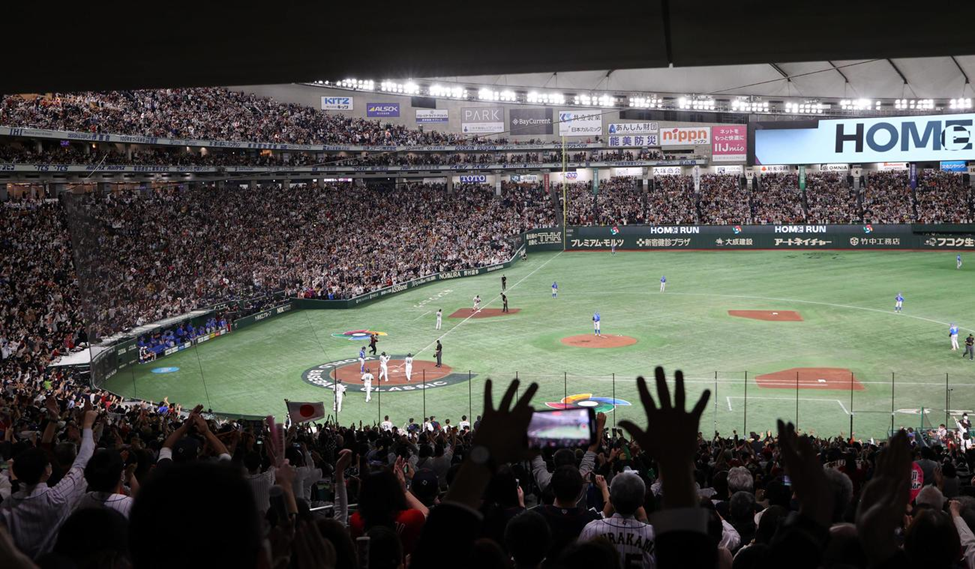
Japanese fans treat the game like a coordinated performance. Each team has organized cheering sections with songs, chants, and even instruments like trumpets. It’s synchronized, respectful, and constant.
Korean fans bring something closer to a festival. Cheerleaders lead chants, music blares between pitches and the crowd dances as much as it watches. The atmosphere is electric, bordering on party-like.
The experience difference:
- Japan: rhythmic, unified, almost ceremonial
- Korea: loud, spontaneous, entertainment-driven

Player Development and MLB Pipeline
Japan has long been a major exporter of talent to MLB. Stars like Shohei Ohtani, Ichiro Suzuki and Yu Darvish emerged from NPB, bringing with them the league’s disciplined style.
Korea has also produced MLB talent—most notably Hyun Jin Ryu and Ha-Seong Kim—but the pipeline is smaller. However, KBO has increasingly gained international attention for its offensive style and entertaining gameplay.
Development philosophy:
- NPB: rigorous training, long-term refinement
- KBO: adaptable, increasingly global
I’d like to add there that the KBO seems to take baseball a little less seriously than the NPB. For example, check out this clip on the “Korean Bunt Derby”!:
Foreign Players and League Identity

Both leagues limit the number of foreign players per team, but their roles differ.
In Japan, foreign players are often power hitters or key pitchers brought in to complement a highly structured roster.
In Korea, foreign players frequently become centerpieces—expected to deliver big offense and headline performances.

The Intangible: Tradition vs. Evolution
NPB games often feel like a continuation of history. The influence of early baseball pioneers and decades of tradition is evident in everything from training camps to media coverage.
KBO, on the other hand, feels modern and evolving—leaning into entertainment, media engagement and fan accessibility in ways that mirror global sports trends.

Final Verdict: Two Leagues, Two Identities
There’s no “better” league—only different experiences.
- Want precision, history, and a chess match on grass? Watch NPB.
- Want excitement, noise, and a show-stopping spectacle? Watch KBO.
Together, they represent two compelling visions of what baseball can be —proving that while the diamond is universal, the way the game is played is anything but.
Author’s Note: Even though Taiwan has a decent baseball following, I decided not to include their Chinese Profession Baseball League (CPBL), since they only have six teams, three of which are in the capital city Taipei area.

Leave a Reply