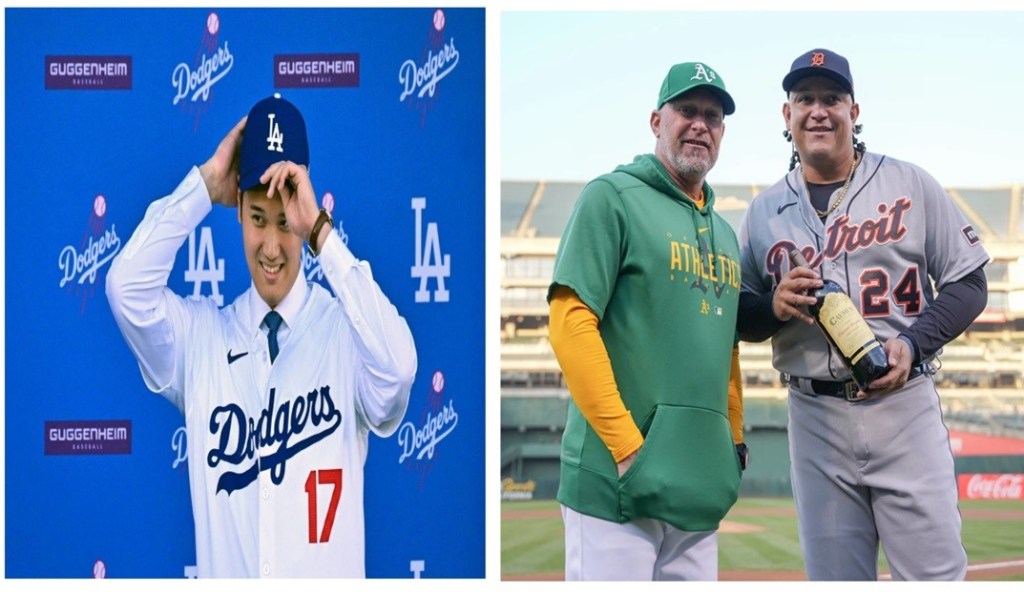
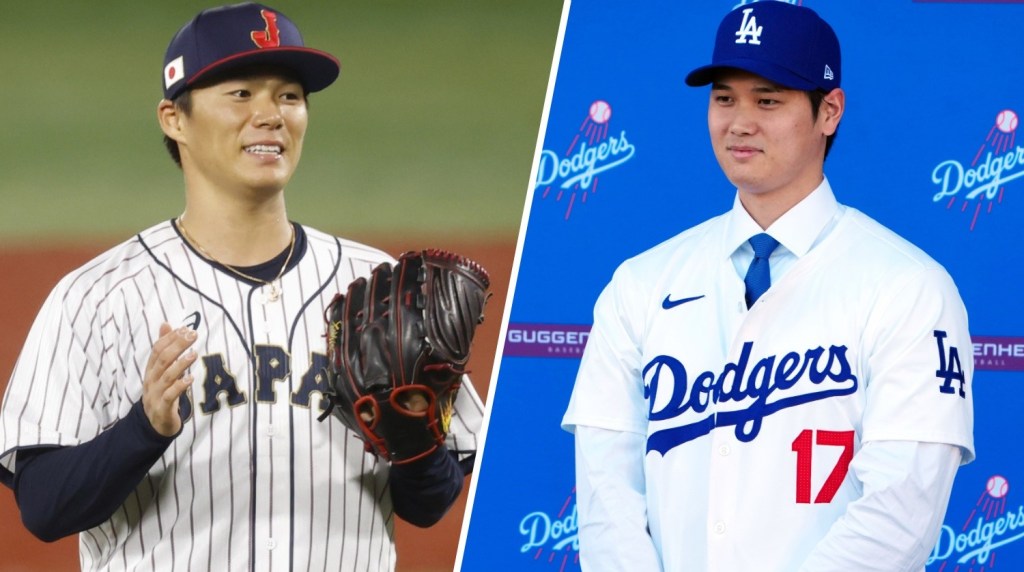
The Los Angeles Dodgers have made the biggest splash this off-season of all the major league clubs by signing Shohei Ohtani and Yoshinobu Yamamoto. Combined, the Dodgers shelled out over $1 billion to obtain Ohtani ($700 million over 10 years) and Yamamoto ($325 million over 12 years). Ohtani’s contract is the largest in sport’s history and more than $250 million larger than the next largest contract ever handed out in baseball. Ironically, the previous largest contract was Ohtani’s now former teammate Mike Trout of the Los Angeles Angels, whose contract totaled $426.5 million.
Ohtani’s contract is unique though, as he has decided to defer $680 million of his payout ten years after his contract ends. Therefore, his contract will pay him “only” $2 million per year from 2024 through 2033 and then once finished he will earn the remaining $68 million per year from 2034 to 2043. That brought down the present value of the contract to $460,814,760 and instead of a $70 million AAV (Average Annual Value), this reduces the annual Competitive Balance Tax (CBT) threshold for the Dodgers for Ohtani’s 10 year contract to $46,081,476. The reality from a monetary standpoint is that the Dodgers will have to pay up $700 million, but instead of over 10 years, Ohtani structured his deal to allow a payout over 20 years.
Despite the deferral without interest, $700 million is still an enormous amount of money and only a handful of organizations could afford to pay such an amount even over 20 years. Combined with the Yamamoto contract, even fewer clubs could compete on that level of financial obligation to pay just two players more than $1 billion.
If we forget about the deferrals for Ohtani for a moment, then his AAV of $70 million combined with the Yamamoto AAV of $27.08 million totals $97.08 million for just two players. If we compare that $97 million for these two players, we see that it would have exceeded the total payrolls for these eight major league clubs in 2023:
- Cincinnati Reds – $96.7M
- Kansas City Royals – $96.1M
- Washington Nationals – $93.4M
- Cleveland Guardians – $91.9M
- Tampa Bay Rays – $79.4M
- Pittsburgh Pirates – $75.7M
- Baltimore Orioles – $71.1M
- Oakland Athletics – $62.2M
Even if we only valued the Ohtani contract at the present value amount of $46.1M AAV that would still total $73.2M, when combined with the Yamamoto contract, which means it would still exceed the payrolls of the Orioles and Athletics.
What do these enormous payouts mean for the health of the overall game?
On the positive side, those forecasting the decline of baseball must be exaggerating that claim, since the Dodgers were able to reward one of their players with the richest sport’s contract ever. In addition, the New York Mets recorded the highest CBT salary threshold for an MLB franchise with an annual payroll this past year of $366.2 million. Therefore, the fact that baseball is reaching these meteoric salary levels indicates a business model that is far from decline and teams with the resources to pay out eye-popping payrolls.
On the negative side though, it cannot be good for the game of baseball to have this huge divide between the rich and the poor clubs. The 10 top payroll clubs averaged $250.4M while the bottom 10 clubs averaged $89.0M. Therefore, on average those top ten clubs spent 181% more on payroll than the bottom 10 teams. Even when compared to the league average the numbers were striking. The league average payroll was $165.7M in 2023, so those bottom 10 salary teams spent a whopping 46% less than the league average.
A counter argument one might make is that while it is true that six (Rangers, Phillies, Dodgers, Astros, Blue Jays and Braves) of the ten highest payroll teams made the postseason, the ten lowest payroll teams did not fare that much worse by sending four (Diamondbacks, Marlins, Rays and Orioles) to the playoffs. In addition, none of the three top spenders (Yankees, Mets and Padres) reached the playoffs.

Statistically though, being a bottom spender is a detriment and the odds state that it is not a position one would want to be in to win a championship or even just to reach the post season. Sure, the naysayers will point to the Tampa Bay Rays, but they appear to be the exception and not the rule. Until we see that penny pinching formula regularly replicated by someone else than the Rays, we need convincing that a bottom third payroll will lead to continued success.
For a statistical analysis of the correlation between win rate percentage and payroll we cite this Boston University study from 2015 that notes, “The principal finding of the analysis exposed that payroll does in fact play a role in affecting win percentage”. There is a lot to unpack with this analysis, but overall the study does confirm a direct correlation between the more a club spends on payroll that this will thus increase their win rate.
The problem in Major League Baseball is that unlike the other sports there is a large divide between the haves and the have-nots. If you consider that all NFL, NBA and NHL teams essentially spend similar amounts in their respective leagues. That is not the case in baseball, and if you are a fan of one of those teams that has money to spend life is great, but if you instead cheer for a small market team, the likelihood of losing your superstar player is a real one. Instead, MLB should find a more equitable system that gives the poorer smaller market teams just as good of a chance for competing as the richer big market clubs. That change would cure many of MLB’s ills and would generate more excitement and hope for all clubs, not just the rich ones.

 Baseball Purist
Leave a reply to The Poor Get Poorer – Baseball Purist Cancel reply