By Bill Coleman
Few political figures of the 20th century are as tightly bound to a single sport as Fidel Castro was to baseball. In Cuba, baseball is not just a pastime, it is a cultural language, a shared rhythm and Castro spoke it fluently. Long before he became the face of revolution, he was a tall, hard-throwing student with a passion for the game. And long after he took power, baseball remained one of the most revealing windows into how he saw Cuba, and how he wanted the world to see it.
The Myth and the Man on the Mound
Stories about Castro’s baseball talent have drifted into legend. Some claim he threw with such velocity as a young man that scouts from Major League Baseball teams took notice. Whether or not those tales are embellished is up for debate. What is well documented was his deep involvement in the sport during his university years in Havana. He pitched, he studied the game and he absorbed its rhythms the way other future leaders might study law or economics.
Baseball, in those years, was also a connection point between Cuba and the United States. Cuban players moved between leagues, and MLB teams trained on the island. It was a shared sporting ecosystem, one that would soon fracture dramatically.

Hoak’s Hoax
“Hoak’s Hoax” refers to a widely circulated baseball story fabricated by former Major League Baseball infielder Don Hoak and sportswriter Myron Cope, published in Sport magazine in June 1964. The story claimed that in 1950-51, while playing in the Cuban winter league, Hoak faced Fidel Castro in an unexpected batter-versus-pitcher showdown during an anti-Batista student demonstration, where Castro grabbed the ball and pitched to him.
Key Facts Regarding the Hoax
- Fabricated Tale: The story is considered a fabrication, designed to enhance the myth of Castro as a talented, but overlooked, pitching prospect, a legend that was frequently embellished by others over the years.
- The Reality of the Scene: The encounter, as told by Hoak, involved too many inaccuracies regarding teams, dates and personalities to be considered credible.
- Inconsistencies: Hoak’s career-ending stories often included exaggeration. The tale was later debunked by Cuban baseball historian Everardo Santamarina, who highlighted discrepancies in the dates, the involvement of specific players and the behavior of the umpire mentioned.
- Castro’s Prowess: Castro never played for the University of Havana team, despite tales suggesting he was scouted by teams like the Washington Senators.
The Real Baseball Event
While the specific Hoak-Castro encounter was fake, it was likely based on a real event where a Cuban league game was interrupted, also known as the 1959 “Barbudos” (Bearded Ones) exhibition game.
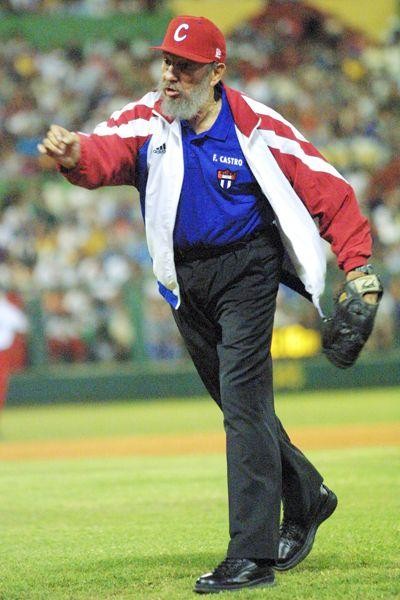
- On July 24, 1959, following the revolution, Castro did appear on the mound for a one-time, two-inning exhibition game, wearing a military uniform for his “Los Barbudos” team.
- This real 1959 exhibition game was likely the source of the photos often used to bolster the fabricated tales.
The story has since been labeled “not even Babe Ruth’s ‘Called Shot’ ever got such a free ride” by historians for its enduring popularity despite being deemed false.

Revolution and Reinvention of the Game
When Castro came to power in 1959, baseball did not disappear, it transformed. Professional leagues were abolished, and replaced with a state-run amateur system designed to reflect socialist ideals. In Castro’s vision, baseball would no longer be about private profit or individual stardom. It would belong to the people.
The creation of the Cuban National Series turned the sport into a national showcase. Players became symbols of collective pride rather than individual wealth. Teams represented provinces, not corporations. The ballpark became, in many ways, an extension of the revolution itself.
Critics argued that eliminating professional play cut Cuba off from the highest levels of competition, especially from MLB. Supporters countered that it preserved the purity of the game and elevated national identity. Castro, unsurprisingly, stood firmly in the latter camp.
Baseball as Diplomacy
Castro understood baseball’s power beyond the diamond. He used it as a diplomatic tool, particularly during the Cold War. International competitions became stages where Cuba could assert itself against global powers, including the United States.
Victories by the Cuban national team were framed as ideological triumphs as much as athletic ones. The sport became a proxy battleground with gloves and bats standing in for politics and power.
Yet even amid tensions, baseball occasionally softened the edges. Exhibition games and quiet exchanges between players hinted at a shared love of the game that transcended ideology. Castro himself would sometimes appear at games, chatting with players, analyzing plays, and reveling in the sport he never truly left behind.

A Complicated Legacy
Castro’s relationship with baseball was, like much of his legacy, layered and debated. On one hand, he preserved and elevated the sport as a central pillar of Cuban identity. On the other, his policies limited players’ opportunities to compete and earn on the global stage.
Still, it is impossible to separate Castro from the story of Cuban baseball. He didn’t just influence it; he reshaped its structure, its meaning and its place in society.
The Game That Never Left Him
In later years, long after stepping away from daily governance, Castro remained a fan. He followed games, discussed players and stayed engaged with the sport that had been part of his life since youth. Baseball, for him, was never just nostalgia, it was continuity.
In a world where political identities often harden into abstraction, Castro’s connection to baseball offers something more human. It shows a leader who, despite immense power and controversy, still found joy in a well-thrown pitch, a clean double play and the timeless drama of nine innings.
And on an island where the crack of the bat echoes through generations, that connection ensured his presence would linger, not just in history books, but in ballparks.

Extra Innings!!!
“Modified” Fidel Castro Card Pulled from eBay
For the full details about this baseball card story, please go to Sports Collectors Daily – Rich Mueller. Briefly though:
Topps Allen & Ginter issued a single Fidel Castro card in 2007 containing an authentic cut signature. After buying the card an eBay seller with the ID “markkali” then relisted it on the eBay auction block, but this time with numerous anti-Castro references and statements written on the front and back.

The seller took this action for a few reasons. First, he decided to use the auction to raise funds for an opposition group named the Center for a Free Cuba. Second, he wanted to send a “send a clear message to Topps and other trading card manufacturers that they should refrain from glorifying mass murderers (Castro)”. Third, he felt the need to “raise awareness that political prisoners and journalists are still to be found in Cuban prisons, and promote the ideals of the American founding: that each and every human being — not just Americans, incidentally — intrinsically enjoys the inalienable rights to life, liberty and the pursuit of happiness.”
eBay though stopped the auction approximately 24 hours later citing that it was not because of its content, but because it did not have an accompanying letter signed by the charity involved.
It is unclear if the seller ever put this card up for auction or whether he still owns this Fidel Castro baseball card.

Leave a Reply